the Six Articles of Faith in Islam?

What are the Six Articles of Faith in Islam?

Allah, the sole true God, is one and unique in the universe, in accordance with the tenets of Islam. In accordance with Islamic teachings, Allah will judge and reward His creatures in the Hereafter in accordance with their intentions and deeds. the Six Articles of Faith in Islam guidance and will were conveyed to humanity by His prophets and messengers. Although the following six articles of faith—the fundamental of Islam—is obligatory for individuals seeking to identify as Muslims.

The Belief in Allah

The belief in Allah, which translates to “the One deserving of worship,” is the initial and paramount article of faith in Islam. Arabic does not assign gender or plural forms to the name Allah, signifying Allah is the only care taker and creator. As the only genuine God, Allah has no partners, associates, or equals, according to the Islamic faith. Since He possesses the ability and wisdom to create whatever He desires, He is the origin and source of all that exists. His right and authority to command and prohibit, as well as to recompense and punish, are derived from the fact that He is the Lord and Master of the universe. Just and sagacious, he is also the most merciful and compassionate. His name and qualities are the most impeccable and exquisite, and He is the epitome of perfection and beauty. The epitome and purpose of existence, He is beyond all deserving of adoration and adoration.

The Belief in the Angels

A conviction in the angels, who are regarded as Allah’s pure and obedient agents, constitutes the second article of faith in Islam. They have no independent volition or desires, as they are formed from light. They congregate in the presence of Allah and obediently implement His directives. Maintaining and regulating natural phenomena, conveying divine revelation, documenting human deeds and actions, and safeguarding and protecting believers are a few of the duties and functions they carry out throughout the universe. Furthermore, they beseech Allah for pardon and clemency on behalf of the worshippers. In Islam, the following are some of the most renowned and significant angels:

One of the angels who delivered the revelation to the prophets, particularly Prophet Muhammad (peace be upon him), is Jibril (Gabriel).

The rain and vegetation are governed by Mika’il (Michael), who also ensures that the creatures have food and water.

• The trumpet that will proclaim the Day of Judgement and the resurrection of the deceased will be blown by Israfil (Raphael).

The angel of death, Izra’il (Azrael), is responsible for removing the spirits of those who pass away.

Ignitioner of Hell’s punishment for unbelievers and transgressors; Malik is one of these individuals.

Ridwan, the protector of Paradise, is a celestial being who bestows favour and recognition upon devout individuals.

The Belief in the Books

Adherence to the divine scriptures, as revealed by Allah to His prophets and messengers throughout history, constitutes the third article of faith in Islam. For the benefit and salvation of humanity, Allah has best guidance and wisdom in these writings. Allah also prescribed for His servants the laws and regulations that are included in them. These pertain to the moral and spiritual behaviour. The most well-known and significant of the books that Muslims believe Allah revealed to various nations and prophets are as follows:

• TheTorah, comprises narratives and covenants pertaining to the Israelites. It was revealed by Allah to the Prophet Musa (Moses).

• The Prophet Dawud (David) received the Zabur (Psalms), a sacred text disclosed by Allah, in which he and his disciples offer supplications and extols.

• The Gospel (Injil), the textual record comprising the teachings and miracles of Prophet Isa (Jesus) and his disciples, which Allah revealed to him.

The final and most comprehensive scripture revealed by Allah to the Prophet Muhammad, the Qur’an, contains the everlasting and universal message of Islam applicable to all individuals and eras.

Muslims hold the belief that the Qur’an is the only book that has been preserved and safeguarded against corruption and alteration. Furthermore, it is their conviction that the Qur’an serves as both the criterion for truth and a miracle, as well as the vessel through which the faithful are guided and healed.

The Belief in the Prophets

Believers in the prophets, whom Allah selected and dispatched to impart His message and provide guidance to humanity, constitute the fourth article of faith in Islam. By their words and deeds, they guide individuals to Allah and serve as the epitome of spiritual and moral excellence. Furthermore, they apprise individuals of the repercussions that will ensue from their defiance and lack of faith, while also trumpeting the positive outcomes and favours that will result from their adherence and trust. Many nations and eras were visited by prophets sent by Allah, according to Muslims; however, the following are the most prominent and well-known:

One such individual is Adam, the progenitor of all humanity and the first prophet.

• The prophet Nuh (Noah), who constructed the ark and prevented the devastation of the wicked people by the great deluge, preserved his followers.

As the progenitor of both the prophets and the nations, Ibrahim (Abraham) is credited with instituted the worship of the one and only true God.

• The prophet Moses, who delivered the Israelites from Pharaoh’s oppression and was entrusted with the Torah by Allah, is an example.

1. Isa (Jesus), the prophet who, with Allah’s permission, conducted numerous miracles from the miraculous birthplace of the Virgin Mary.

Mohammed, the last and definitive prophet, is credited with delivering the Qur’an and the comprehensive and all-encompassing teachings of Islam.

In accordance with Muslim belief, every prophet was sincere and virtuous, and they all delivered the identical message of Allah’s unity and worship. Furthermore, they maintain the conviction that while all prophets ought to be treated with reverence and honour, they should never be equated with Allah or worshipped.

A Confidence in the Afterlife and the Day of Judgement

Islam recognises the Day of Judgement and the afterlife as fundamental principles and realities beyond this mortal realm. These concepts and events constitute the fifth article of faith in Islam. In the Hereafter, Muslims are expected to be judged and rewarded in accordance with their deeds and intentions, as they consider this life to be a trial and an examination. Additionally, they hold the conviction that this life is transitory and inadequate in comparison to the Hereafter, which is perpetual and enduring. Some of the most fundamental tenets of the belief in the afterlife and the Day of Judgement include:

• The stages denoting the conclusion of this existence and the commencement of the next constitute death and the grave. Departure of the soul from the body, in accordance with the Islamic belief, is death an unavoidable and certain demise. Additionally, it is their conviction that the grave serves as the initial stopping point in the afterlife, which, contingent upon one’s faith and actions, will either resemble a paradise garden or an abyss of hell.

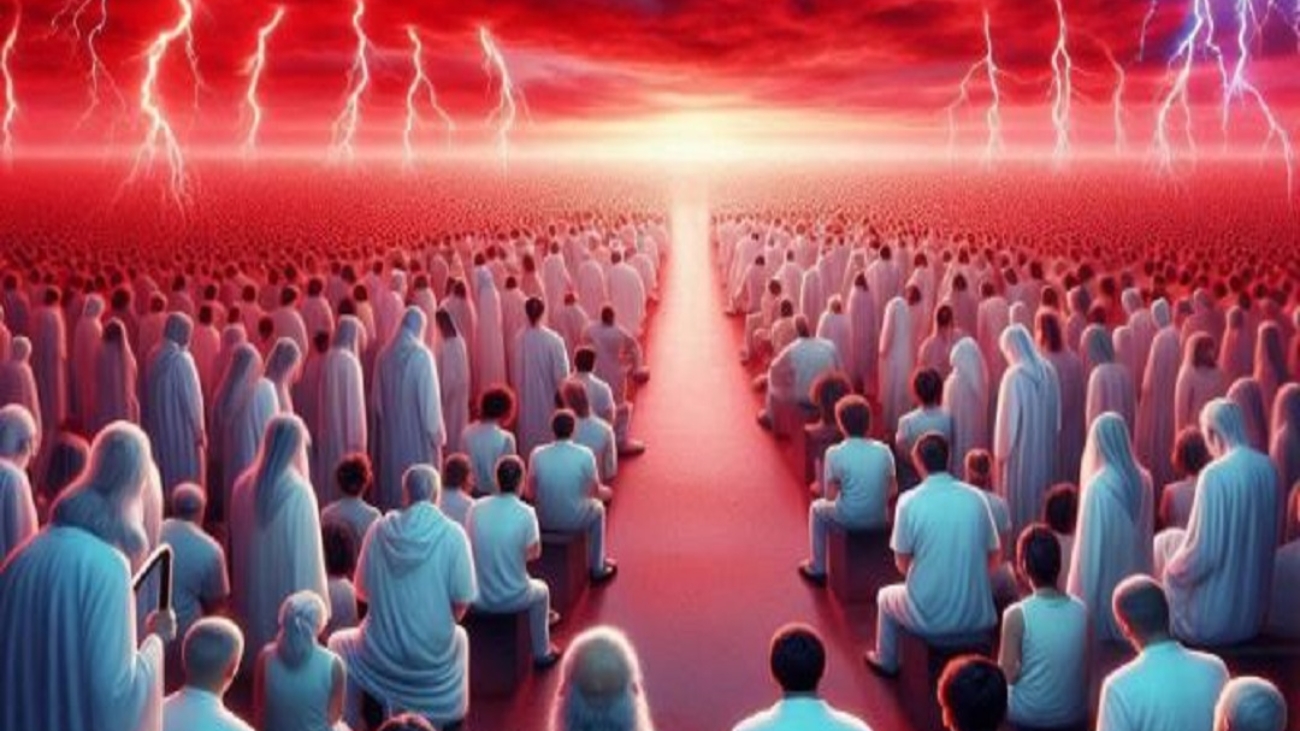
• On the Day of Judgement, Allah will resurrect all individuals who have ever lived and hold them responsible for their decisions and deeds. This shall be accomplished through the processes of reckoning and resurrection. Regarded by Muslims as a day of justice and equity, the Day of Judgement will be characterised by profound anguish and horror. Additionally, it is their conviction that Allah will audit the people’s conduct by placing their recordings of deeds in either their right or left hand, as if they were to place them on a scale.

• Continents ultimately reach either Paradise or Hell, contingent upon their conduct and religious convictions. According to Islamic belief, Paradise is an everlasting haven of joy and ecstasy, comprised of an innumerable number of delights and pleasures that have yet to be perceived with the naked eye, audibly perceived, and mentally conceived of. Additionally, it is their conviction that hell is an everlasting torment and misery, comprised of punishments and atrocities that are beyond the capacity of any individual to endure or tolerate.

The Belief in the Divine Decree

Belief in the divine decree, which entails the conviction that Allah has predetermined and decreed all events in the universe and possesses transcendent knowledge and authority over everything, constitutes the sixth and final article of faith in Islam. The divine decree, in the view of Muslims, is a trial and a challenge for mankind and an expression of Allah’s wisdom and power. Furthermore, they maintain the conviction that the divine decree does not in conflict with the autonomy and accountability of humanity. They insist that in pursuit of their ambitions and goals, they must exert effort and labour while placing their support and reliance in Allah.

Conclusion

The acquisition of knowledge regarding Allah knows everthing all past, present, and future events, and that nothing is concealed or unknown to Him. He knows all secrets and considerations of His creatures as well as the past, present, and future. Furthermore, possessing knowledge of the results and repercussions of every action and occurrence, He discerns what is optimal and undesirable for His devotees.
How Adhan Started According To Islam

How Adhan Started According To Islam

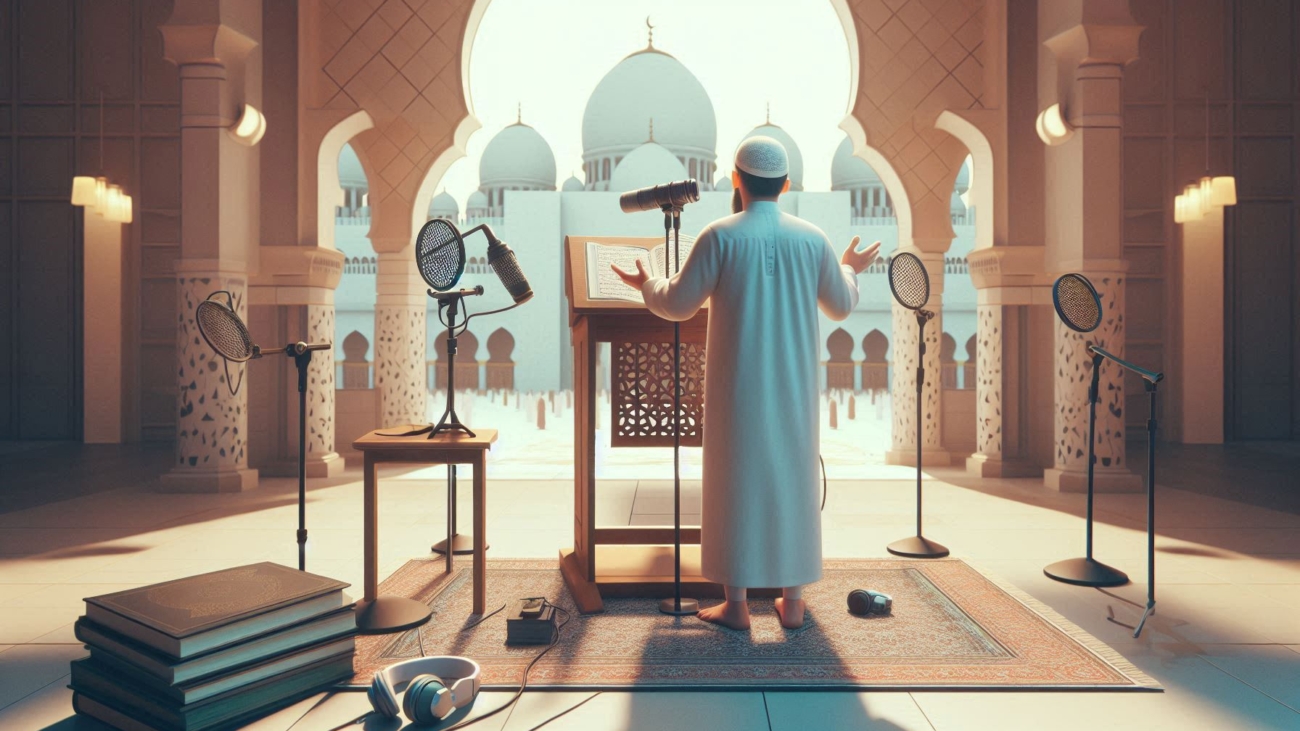
The Azaan was started as a practice after the migration of the Holy Prophet (SAW) and his followers to Medina. How Adhan Started According To Islam is an important part of islam. The early Muslims required an efficient means of call to the prayer for the congregation and various strategies were proposed.

The Vision of Abdullah ibn Zayd

The dream that Abdullah ibn Zayd (RA), companion of the Prophet had one night was that he saw a man puttimg on green cloths and the man had a bell with him. Abdullah ibn Zayd in the vision asked the man if he could ring the bell for offering prayers. The man in the vision wanted to teach Abdullah the correct way of calling for prayer instead of a whistle, he described to him the words in Azaan.

Another concerns Abdullah ibn Zayd narrating a vision to the Prophet Muhammad (SAW) and the prophet confirming it as an actual vision. The Prophet then, asked Bilal ibn Rabah (RA) a freed slave who had the most enchanting voice to recite the Azaan using the translated words from the vision.

How Adhan Started According To Islam

Hadith About The Adhan

Several Hadiths describe the events leading to the establishment of the Azaan:

Hadith from Sunan Abi Dawood
One of the narrations found in Sunan Abi Dawood states:

Narrated Abdullah ibn Zayd ibn Abd Rabbih:


“When the Prophet (SAW) ordered a bell to be made so that it could be struck to gather the people for prayer, a man carrying a bell in his hand appeared to me while I was asleep. I said: O servant of Allah, will you sell the bell? He said: What will you do with it? I said: We will call the people to prayer. He said: Should I not guide you to something better than that? I said: Yes. He said: You should say: Allahu Akbar, Allahu Akbar, Allahu Akbar, Allahu Akbar, Ashhadu an la ilaha illallah, Ashhadu an la ilaha illallah, Ashhadu anna Muhammadar Rasulullah, Ashhadu anna Muhammadar Rasulullah, Hayya ‘ala-s-Salah, Hayya ‘ala-s-Salah, Hayya ‘ala-l-Falah, Hayya ‘ala-l-Falah, Allahu Akbar, Allahu Akbar, La ilaha illallah.”
When the morning came, I went to the Messenger of Allah (SAW) and informed him of what I had seen. He said: It is a true vision, Insha’Allah. He then commanded Bilal (RA) to pronounce the Azaan, saying that he had a louder voice than I did. So I got up with Bilal (RA) and began to teach him the words, and he pronounced them. Umar ibn al-Khattab (RA) heard the Azaan while he was in his house, and he came out with his cloak on, saying: By Him Who has sent you with the truth, I also saw the same (dream) as has been revealed.”

Another Hadith from Sahih al-Bukhari mentions

Narrated Ibn Umar (RA):
“When the Muslims arrived in Medina, they used to assemble for the prayer, and used to guess about the time for it. During those days, the practice of Azaan for the prayers had not been introduced yet. Once they discussed this problem regarding the call for prayer. Some people suggested the use of a bell like the Christians, others proposed a trumpet like the horn used by the Jews, but Umar (RA) was the first to suggest that a man should call (the people) for the prayer; so Allah’s Messenger (SAW) ordered Bilal (RA) to get up and pronounce the Azaan for prayers.”

Significance of the Adhan

The Azaan has a very important role in islam not only prays the Muslims but also declaring the main doctrines of the religion. The words in the Azaan are The testimony of the Oneness of Allah, and the prophethood of Muhamad, whatsoever happened around Muslims is a reminder of their religious obligations, and the role of prayers in their lives.

Allah Is The Creator Of Universe

Allah Is The Creator Of Universe

Allah is the creator of all universe according to Islam. This means that Allah is the source and origin of everything that exists, and that He has the power and wisdom to create whatever He wills. Allah says in the Quran:

“He is Allah, the Creator, the Inventor, the Fashioner; to Him belong the best names. Whatever is in the heavens and earth is exalting Him. And He is the Exalted in Might, the Wise.” (59:24)

Some Examples Of The Quranic Evidence for Allah Is The Creator of Universe

The heavens and the earth. Allah created the heavens and the earth and everything in between in six days, and then He rose over the Throne. He made the sun, the moon, and the stars, and He set them in their orbits. He also created the angels, the jinn, and the human beings, and He gave them different abilities and responsibilities. Allah says:

“Indeed, your Lord is Allah, who created the heavens and the earth in six days and then established Himself above the Throne. He covers the night with the day, [another night] chasing it rapidly; and [He created] the sun, the moon, and the stars, subjected by His command. Unquestionably, His is the creation and the command; blessed is Allah, Lord of the worlds.” (7:54)

The living beings. Allah created all kinds of living beings, such as plants, animals, birds, fish, insects, etc. He gave them different shapes, colors, sizes, and functions. He also created diversity and balance among them, and He sustains them with His provision. Allah says:

“And it is He who created the heavens and the earth in truth. And the day He says, “Be,” and it is, His word is the truth. And His is the dominion [on] the Day the Horn is blown. [He is] Knower of the unseen and the witnessed; and He is the Wise, the Acquainted. And it is He who created from water a human being and made him [a relative by] lineage and marriage. And ever is your Lord competent [concerning creation]. And We have not created the heavens and the earth and that between them except in truth. And indeed, the Hour is coming; so forgive with gracious forgiveness. Indeed, your Lord – He is the Knowing Creator.” (6:73-75)

The human soul. Allah created the human soul and breathed into it His spirit. He gave the human soul free will, intelligence, conscience, and emotions. He also gave the human soul guidance and revelation, and He tested it with trials and tribulations. Allah says:

“And [mention, O Muhammad], when your Lord said to the angels, “I will create a human being out of clay from an altered black mud. And when I have proportioned him and breathed into him of My [created] soul, then fall down to him in prostration.” (15:28-29)

These are some of the examples of Allah’s creation, which demonstrate His greatness, majesty, and mercy. Allah is the creator of all universe, and He deserves all praise and worship.

Book Trial Quran Classes

Allah’s Creation as a Sign (Ayah) of His Existence

The concept of sign in Islamic theology is encompassed by Ayatullah: the objects and phenomena that form the universe: planets, stars, oceans, mountains, lives forms etc., are the sign of Allah and His power. Qur’an encourages human beings to view the creation, study it and think about it in a manner of understanding Allah. This is sometimes called Tafakkur, literally contemplation, which draws a person nearer to a realizing of the majesty of Allah.

Thus, the recurring pattern of living things, the four seasons, the meticulous cycle of sky-rotating celestial bodies, the bestowed ecological harmony are all, in the eyes of Allah. The Qur’an urges believers to think deeply about these phenomena:

Surah Al-Imran (3:190-191):

“Indeed, in the creation of the heavens and the earth and the alternation of the night and the day are signs for those of understanding.”

The Process of Creation

In Islamic, it was creating of the universe by Allah and this was a first only and it was also done without any effort. By the phrase “Kun fa-yakun” the process of creation tells us that when Allah wills something into existence, then its creation occurs at once in an instant, and devoid of boundaries of space as well as time or material causation. In this context, God’s formation is simple, or better put, sublime while human methods of formation demand time, resources, and efforts.

Surah Ya-Sin (36:81-82):

Is not He who created the heavens and the earth able to create the likes of them? Yes, and He is the Knowing Creator. His command is only when He intends a thing that He says to it, ‘Be,’ and it is.”

The Purpose of Creation

In Islam, we understand that Allah created the universe intentionally and with plan. While some philosophers consider the universe as by-projection or by-accident, Islam is categorical in asserting every creation has a meaning, a purpose.

The main purpose for their creation is to act as witnesses of the greatness of Allah and as a kind of a sign as well. Thus, for human beings especially the allowed nations, the purpose of creation is to worship and serve Allah. The Qur’an states:

Surah Adh-Dhariyat (51:56):

“And I did not create the jinn and mankind except to worship Me.”
Human beings are given intellect and free will, which allow them to recognize the Creator through His signs and to choose to submit to His will.

Allah’s creation of the world as a continuous process

Islam does not only recognize Allah who created the universe at one certain period of time. Allah also maintains and sustains the universe every moment of time. The creation goes on, and he is constantly engaged with affairs of the cosmos and the world in particular, with wisdom. He is also the Ever-Living (Al-Qayyum) – the One who does not just create things but also makes them endure.

Surah Fatir (35:41):

“Indeed, Allah holds the heavens and the earth, lest they cease. And if they should cease, no one could hold them [in place] after Him.”

The connection between Allah and the Universe

There is great relation between Allah and His creation. As for Allah, He is the free of all defects and is separate from His creation. He has no relation to the creation and it also has no relation to Him. But Allah is also transcendent, which means He is near unto His servants, supervising all that takes place and acts according to the supplications of his creatures.

Surah Al-Hadid (57:4):

“He is with you wherever you are, and Allah, of what you do, is Seeing.”

Book Trial Quran Classes
Hazrat Adam

Hazrat Adam: The First Prophet in Islam

The First Prophet of Islam was Hazrat Adam.

In Islamic theology, Hazrat Adam, a.s., frequently regarded as the first person and the first prophet in Islam, has a major place. His creation, life, and death are told in detail, and these events provide deep truths that form the basis of Islamic thought.

Adam’s creation, according to Islam

The Birth of Adam

The creation of Adam is described in graphic detail in the Quran. Adam, a representation of the lowly beginnings of humanity, was formed by Allah from a mixture of dust and water. Allah created Adam’s physical form and then infused him with His spirit to give him life. The Bestowal of Knowledge

Allah blessed Adam with knowledge, distinguishing him from all other creatures. This divine knowledge encompassed the names of all things, demonstrating the superiority of intellect over physical strength.

Hazrat Adam

The Fall of Adam and Eve

The Forbidden Fruit

Despite the comforts of Paradise, Adam and his wife, Hawwa (Eve), fell prey to the whispers of Satan, consuming the forbidden fruit. This act symbolizes humanity’s susceptibility to temptation and the potential for disobedience.

Adam’s Redemption

After realizing their mistake, Adam and Eve sought forgiveness from Allah. Their sincere repentance highlights the importance of seeking forgiveness and the infinite mercy of Allah.

Adam’s Life on Earth

The Children of Adam and Eve

On Earth, Adam and Eve started their lineage. Their children, including Abel (Habil) and Cain (Qabil), played pivotal roles in human history.

Adam’s Role as the First Prophet

As the first prophet, Adam relayed Allah’s teachings to his descendants, laying the groundwork for the subsequent chain of prophet hood. His prophet hood underscores the necessity of divine guidance for humanity’s moral and spiritual development.

The Death of Hazrat Adam a.s

Hazrat Adam a.s lived for a significant period, passing away at the age of 930 years. His death signifies the inevitable reality of mortality, regardless of one’s stature.

Significance of Hazrat Adam in Islam

Lessons from Adam’s Story

The life of Hazrat Adam a.s offers valuable lessons, from the importance of knowledge and repentance to the dangers of pride and disobedience.

Conclusion

In conclusion, Hazrat Adam a.s, as the first human and prophet, holds immense significance in Islam. His life story serves as a timeless guide

Frequently Asking Questions

What did Adam do as a prophet?

Creation: Adam was created by Allah from clay and then given life. Allah taught him the names of all things and bestowed upon him knowledge and wisdom.
Trustee on Earth: Allah appointed Adam as a trustee on Earth, instructing him to worship Him and follow His guidance. Adam was given free will and was expected to maintain righteousness and avoid disobedience.
Eve (Hawwa): Allah created Eve, Adam’s wife, from one of Adam’s ribs. They were both placed in the Garden of Eden, where they lived in peace and harmony, enjoying the blessings provided by Allah.

Prophetic Guidance: As the first prophet, Adam received divine revelation and guidance from Allah, which he passed on to his descendants. He taught them about the oneness of Allah, righteousness, and the importance of worshiping and obeying Allah’s commands.

What is prophet Adam height?

The Prophet (ﷺ) said, “Allah created Adam, making him 60 cubits tall. When He created him, He said to him, “Go and greet that group of angels, and listen to their reply, for it will be your greeting (salutation) and the greeting (salutations of your offspring.” So, Adam said (to the angels), As-Salamu Alaikum (i.e. Peace be upon you). The angels said, “As-salamu Alaika wa Rahmatu-l-lahi” (i.e. Peace and Allah’s Mercy be upon you). Thus the angels added to Adam’s salutation the expression, ‘Wa Rahmatu-l-lahi,’ Any person who will enter Paradise will resemble Adam (in appearance and figure). People have been decreasing in stature since Adam’s creation.

What is prophet Adam age?

Hazrat Adam a’s lived for about 960 years.

۔

Obedient man

Prophet Ibrahim A.S

Prophet Ibrahim (as): The Friend of Allah

Prophet Ibrahim (as) is one of Islam’s most revered and beloved figures. As we prepare for the Hajj pilgrimage or engage in acts of devotion during the Zul Hijjah period, it’s important to reflect on the life and teachings of this great Prophet.

Born into a society that worshipped idols, Ibrahim (as) was raised by his sculptor father, Aazer, who crafted idols from stone and wood. Ibrahim needed help understanding why people worshipped these inanimate objects despite his father’s teachings. He felt in his heart that it was wrong.

Hazrat Ibrahim A.S becoming prophet

Born into a society that worshipped idols, Ibrahim (as) was raised by his sculptor father, Aazer, who crafted idols from stone and wood. Ibrahim needed help understanding why people worshipped these inanimate objects despite his father’s teachings. He felt in his heart that it was wrong.

One night, Ibrahim heard a voice calling him as he watched the sky and observed nature. It was Allah commanding him to submit and become a Muslim. Ibrahim’s life was forever transformed, and he became an exemplar for mankind through his open submission and unflinching faith.

Prophet Ibrahim

Hazrat Ibrahim A.S Mission

Ibrahim’s mission was to call his people to the Truth and help them accept Allah as their true God. He turned to his father, urging him to follow the straight path, but his father angrily rejected his request. The townspeople also rejected his message and threatened him with violence.

Undeterred, Ibrahim devised a plan to demolish their idols and leave the largest idol intact to explain their error. The townspeople were horrified upon their return and demanded revenge. The Babylonian king Nimrod sanctioned Ibrahim’s execution, and a huge fire was prepared to burn him alive. But Allah would not allow the Prophet to be executed and ordered the fire to be peaceful for Ibrahim, who emerged unscathed.

Ibrahim continued his mission, calling people to the service of Allah with only Sarah and Lot listening and following him. After being unable to bear children, Sarah offered her servant Hajara as a second wife to Ibrahim, and they were blessed with a son named Ismail.

Starting of Zamzam water

Allah instructed Ibrahim to prepare Hajara and Ismail for a long journey to the Arabian Desert. Allah commanded Prophet Ibrahim to transport his wife Hajara and son Ismail to Makkah. Makkah, at this time, was a desolate region. The Prophet returned home after leaving his wife and son with some dates and water, following Allah’s directives. The dates and water ran out after a while on this desolate land. Hajara started looking for water as young Ismail began to sob from thirst.

She ran up and down the hills in Safa and Marwa seven times. Ismail, the child, started kicking the ground in his anxious state. Hagar noticed water suddenly gushing from the area Ismail was kicking. She started giving Ismail some water she had carefully collected for herself. The water that erupted became known as the Zamzam blessed water. Ibrahim returned years later to see his grown man son and was instructed in a dream to sacrifice Ismail to Allah. Both agreed to submit to Allah’s will, and a ram was provided as a substitute sacrifice.

Ibrahim and Ismail built the Kaaba, a sacred place of worship for all Muslims. Ibrahim addressed his people, urging them to obey Allah, and the Kaaba remains a symbol of unity and devotion to this day

Conclusion

In conclusion, the story of Prophet Ibrahim (as) inspires all believers to remain steadfast in our faith, trust in Allah’s plan for us, and always strive towards righteousness and goodness in our daily lives.