
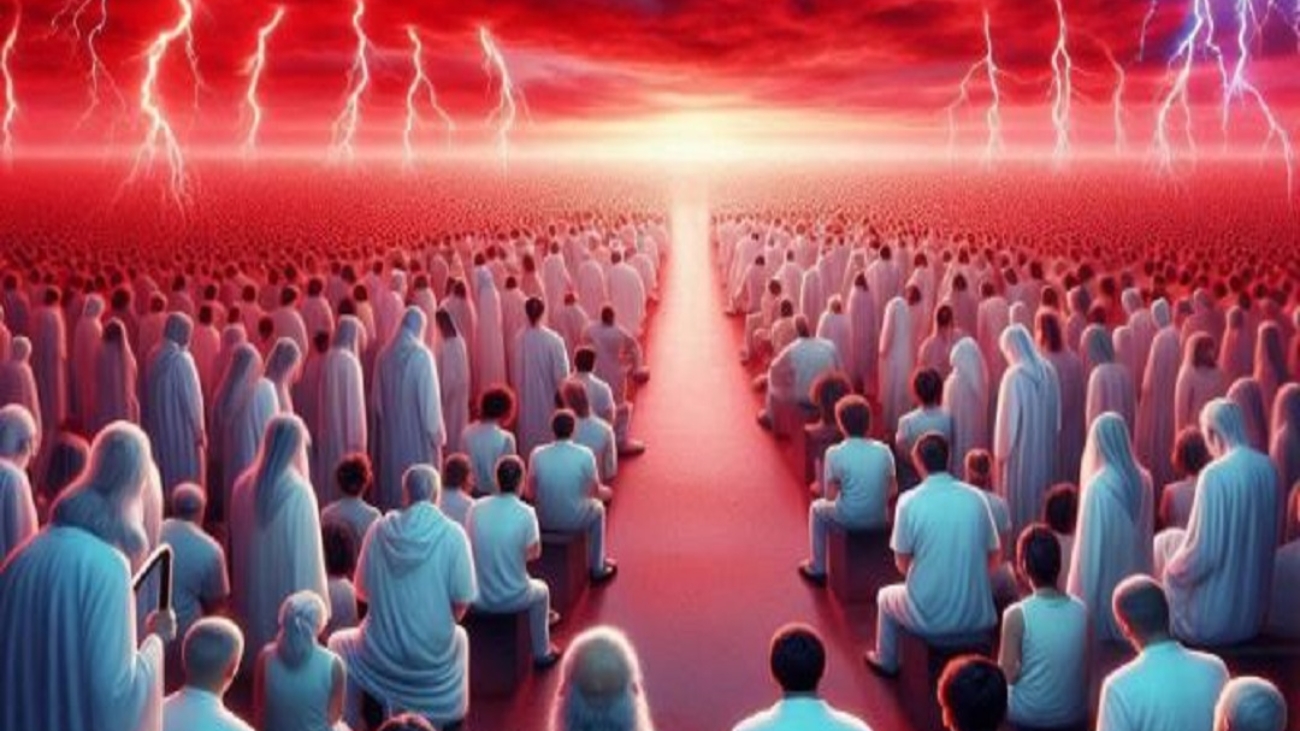
Allah, the sole true God, is one and unique in the universe, in accordance with the tenets of Islam. In accordance with Islamic teachings, Allah will judge and reward His creatures in the Hereafter in accordance with their intentions and deeds. the Six Articles of Faith in Islam guidance and will were conveyed to humanity by His prophets and messengers. Although the following six articles of faith—the fundamental of Islam—is obligatory for individuals seeking to identify as Muslims.
The Belief in Allah
The belief in Allah, which translates to “the One deserving of worship,” is the initial and paramount article of faith in Islam. Arabic does not assign gender or plural forms to the name Allah, signifying Allah is the only care taker and creator. As the only genuine God, Allah has no partners, associates, or equals, according to the Islamic faith. Since He possesses the ability and wisdom to create whatever He desires, He is the origin and source of all that exists. His right and authority to command and prohibit, as well as to recompense and punish, are derived from the fact that He is the Lord and Master of the universe. Just and sagacious, he is also the most merciful and compassionate. His name and qualities are the most impeccable and exquisite, and He is the epitome of perfection and beauty. The epitome and purpose of existence, He is beyond all deserving of adoration and adoration.
Table of Contents
The Belief in the Angels
A conviction in the angels, who are regarded as Allah’s pure and obedient agents, constitutes the second article of faith in Islam. They have no independent volition or desires, as they are formed from light. They congregate in the presence of Allah and obediently implement His directives. Maintaining and regulating natural phenomena, conveying divine revelation, documenting human deeds and actions, and safeguarding and protecting believers are a few of the duties and functions they carry out throughout the universe. Furthermore, they beseech Allah for pardon and clemency on behalf of the worshippers. In Islam, the following are some of the most renowned and significant angels:
One of the angels who delivered the revelation to the prophets, particularly Prophet Muhammad (peace be upon him), is Jibril (Gabriel).
The rain and vegetation are governed by Mika’il (Michael), who also ensures that the creatures have food and water.
• The trumpet that will proclaim the Day of Judgement and the resurrection of the deceased will be blown by Israfil (Raphael).
The angel of death, Izra’il (Azrael), is responsible for removing the spirits of those who pass away.
Ignitioner of Hell’s punishment for unbelievers and transgressors; Malik is one of these individuals.
Ridwan, the protector of Paradise, is a celestial being who bestows favour and recognition upon devout individuals.
The Belief in the Books
Adherence to the divine scriptures, as revealed by Allah to His prophets and messengers throughout history, constitutes the third article of faith in Islam. For the benefit and salvation of humanity, Allah has best guidance and wisdom in these writings. Allah also prescribed for His servants the laws and regulations that are included in them. These pertain to the moral and spiritual behaviour. The most well-known and significant of the books that Muslims believe Allah revealed to various nations and prophets are as follows:
• TheTorah, comprises narratives and covenants pertaining to the Israelites. It was revealed by Allah to the Prophet Musa (Moses).
• The Prophet Dawud (David) received the Zabur (Psalms), a sacred text disclosed by Allah, in which he and his disciples offer supplications and extols.
• The Gospel (Injil), the textual record comprising the teachings and miracles of Prophet Isa (Jesus) and his disciples, which Allah revealed to him.
The final and most comprehensive scripture revealed by Allah to the Prophet Muhammad, the Qur’an, contains the everlasting and universal message of Islam applicable to all individuals and eras.
Muslims hold the belief that the Qur’an is the only book that has been preserved and safeguarded against corruption and alteration. Furthermore, it is their conviction that the Qur’an serves as both the criterion for truth and a miracle, as well as the vessel through which the faithful are guided and healed.
The Belief in the Prophets
Believers in the prophets, whom Allah selected and dispatched to impart His message and provide guidance to humanity, constitute the fourth article of faith in Islam. By their words and deeds, they guide individuals to Allah and serve as the epitome of spiritual and moral excellence. Furthermore, they apprise individuals of the repercussions that will ensue from their defiance and lack of faith, while also trumpeting the positive outcomes and favours that will result from their adherence and trust. Many nations and eras were visited by prophets sent by Allah, according to Muslims; however, the following are the most prominent and well-known:
One such individual is Adam, the progenitor of all humanity and the first prophet.
• The prophet Nuh (Noah), who constructed the ark and prevented the devastation of the wicked people by the great deluge, preserved his followers.
As the progenitor of both the prophets and the nations, Ibrahim (Abraham) is credited with instituted the worship of the one and only true God.
• The prophet Moses, who delivered the Israelites from Pharaoh’s oppression and was entrusted with the Torah by Allah, is an example.
1. Isa (Jesus), the prophet who, with Allah’s permission, conducted numerous miracles from the miraculous birthplace of the Virgin Mary.
Mohammed, the last and definitive prophet, is credited with delivering the Qur’an and the comprehensive and all-encompassing teachings of Islam.
In accordance with Muslim belief, every prophet was sincere and virtuous, and they all delivered the identical message of Allah’s unity and worship. Furthermore, they maintain the conviction that while all prophets ought to be treated with reverence and honour, they should never be equated with Allah or worshipped.

A Confidence in the Afterlife and the Day of Judgement
Islam recognises the Day of Judgement and the afterlife as fundamental principles and realities beyond this mortal realm. These concepts and events constitute the fifth article of faith in Islam. In the Hereafter, Muslims are expected to be judged and rewarded in accordance with their deeds and intentions, as they consider this life to be a trial and an examination. Additionally, they hold the conviction that this life is transitory and inadequate in comparison to the Hereafter, which is perpetual and enduring. Some of the most fundamental tenets of the belief in the afterlife and the Day of Judgement include:
• The stages denoting the conclusion of this existence and the commencement of the next constitute death and the grave. Departure of the soul from the body, in accordance with the Islamic belief, is death an unavoidable and certain demise. Additionally, it is their conviction that the grave serves as the initial stopping point in the afterlife, which, contingent upon one’s faith and actions, will either resemble a paradise garden or an abyss of hell.
• On the Day of Judgement, Allah will resurrect all individuals who have ever lived and hold them responsible for their decisions and deeds. This shall be accomplished through the processes of reckoning and resurrection. Regarded by Muslims as a day of justice and equity, the Day of Judgement will be characterised by profound anguish and horror. Additionally, it is their conviction that Allah will audit the people’s conduct by placing their recordings of deeds in either their right or left hand, as if they were to place them on a scale.
• Continents ultimately reach either Paradise or Hell, contingent upon their conduct and religious convictions. According to Islamic belief, Paradise is an everlasting haven of joy and ecstasy, comprised of an innumerable number of delights and pleasures that have yet to be perceived with the naked eye, audibly perceived, and mentally conceived of. Additionally, it is their conviction that hell is an everlasting torment and misery, comprised of punishments and atrocities that are beyond the capacity of any individual to endure or tolerate.
The Belief in the Divine Decree
Belief in the divine decree, which entails the conviction that Allah has predetermined and decreed all events in the universe and possesses transcendent knowledge and authority over everything, constitutes the sixth and final article of faith in Islam. The divine decree, in the view of Muslims, is a trial and a challenge for mankind and an expression of Allah’s wisdom and power. Furthermore, they maintain the conviction that the divine decree does not in conflict with the autonomy and accountability of humanity. They insist that in pursuit of their ambitions and goals, they must exert effort and labour while placing their support and reliance in Allah.
Conclusion
The acquisition of knowledge regarding Allah knows everthing all past, present, and future events, and that nothing is concealed or unknown to Him. He knows all secrets and considerations of His creatures as well as the past, present, and future. Furthermore, possessing knowledge of the results and repercussions of every action and occurrence, He discerns what is optimal and undesirable for His devotees.